by Editor on December 8, 2012

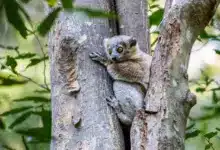
The Northern Sportive Lemur Is The 2013 Representative For The Earth’s Most Imperiled Group Of Primates. Photo Credit: Coke Smith, CokeSmithPhotoTravel.com
Our Ten Most Endangered Animals For 2013
All About Wildlife has made a couple of changes to its Top 10 List of Endangered Species for 2013. As a result, we now have an updated ten most endangered animals list.
As with any Top 10 list, in order to add something to it, something has to be taken away. In this case we removed the greater bamboo lemur and the kakapo parrot to make room for our two new Top Ten Endangered Animals: the northern sportive lemur, and the little dodo bird—AKA, Samoa’s tooth-billed pigeon. [click to continue…]
by Editor on November 28, 2012

The “Little Dodo” Still Exists. But the Question Is, For How Long? Illustration By John Gould (1804-1881).
A Version Of The Dodo Bird Is Still With Us—And We’re In Danger Of Losing This One, Too
The disappearance of the dodo bird (Raphus cucullatus) from the face of the earth almost 400 years ago is one of our most well-known extinction stories. It’s an infamous case in the history of humankind’s relationship with wildlife because it marks one of the first, confirmed instances in which our species completely obliterated another species.
However, the Manumea bird (Didunculus strigirostris), a smaller, lookalike dodo relative—it is also called the tooth-billed pigeon —still remains in existence on two islands in Samoa. The Manumea’s genus name, Didunculus, means “little dodo,” and like it’s larger, extinct cousin, the bird is also a member of the pigeon family. Unfortunately, another thing the Manumea may soon have in common with the dodo bird is extinction. [click to continue…]
by Editor on November 25, 2012

The Siberian Tiger May Get Some Added Protection From The Russian Government. Photo: Sylvia Duckworth
Russia May Finally Correct A Legal Loophole That Lets Tiger Poachers Go Free
The hunting of Siberian tigers has been illegal in Russia since the 1920′s, when it was discovered that the entire population of the tiger subspecies had dwindled to fewer than 40 individuals, all of them living in the Amur region, a narrow strip along the coast of the Russian Far East. The belated conservation effort was nonetheless successful, and the Siberian, or Amur, tiger has rebounded to a current population of between 400 and 500.
However, during the past decade, the world’s largest tiger has faced renewed threats in the form of habitat degradation brought about by logging and development, as well as illegal hunting that has been spurred by rising demand for tiger skins and other tiger parts in China, Vietnam and other Asian countries. Tiger body parts are used to make folk medicines in some parts of Asia. [click to continue…]
by Editor on November 19, 2012

Poachers In South Africa Have Killed Well Over A Rhino A Day In 2012. Photo: Remi Jouan, Wikimedia Commons
South African Poachers Continued Killing Hundreds Of Rhinos During The Past Year
The good news may be that, although the rate of rhinoceros poaching in South Africa did not go down during 2012, it at least seems like it may be leveling off. According to the South African National Parks Authority, by the end of October, 488 rhinos had been killed by poachers. This toll is up by about 10 percent from the 448 South African rhinos illegally killed in 2011. And of course, 2012 is not yet over.
As recently as 2009, “only” 122 South African rhinos were killed by poachers during the year. That number rose to 333 in 2010.
The illegal hunting occurs in spite of vigorous attempts to counter poaching on the part of the South African government. During 2011, the country even sent its military into its largest national park in order to combat the poaching epidemic. [click to continue…]
by Editor on September 22, 2012

Yes, There Are Jobs In Endangered Species Care For College Grads. This U.S. Fish & Wildlife Service Employee Is Handling Critically Endangered Red Wolf Pups. Photo: USFWS.
These Ten Colleges Around The World Work Hard At Protecting Endangered Animals
Students who love wildlife and endangered animals often ask, is it possible to make a living working for the conservation of endangered species?
It is. And while there are numerous paths that can lead to a career in endangered wildlife conservation, one of the surest routes is to attend a college or university where you can major in some form of wildlife biology or conservation. The best schools to go to are the ones that are dedicated to the endangered species cause, and that offer their students plenty of hands-on experience.
The editors of a website called The Best Colleges recently published a list of ten colleges around the globe that they consider to be among the most dedicated to endangered species conservation. [click to continue…]
by Editor on September 16, 2012

All Tiger Subspecies Are Endangered Or Critically Endangered. Which One Should We List As One Of The World’s Top 10 Endangered Species? Photo: B cool
Students & Teachers: Help Us Choose Our Top 10 Endangered Species List For 2013!
Here at All About Wildlife, we are currently working on our Ten Most Endangered Animals list for 2013. This is something we do every year: We move a few endangered animals off of our Top Ten Endangered Species list, and put a few new species or subspecies on it. This isn’t because the animals we remove are any less endangered than they ever were; it’s because so many of the world’s species are in danger of going extinct that we want to shine a bright spotlight on as many of them as we can. One way we do this is to make a few changes to our Top 10 Endangered Animals list on a yearly basis.
But this year, for the first time, instead of doing all the work ourselves, we want your help! [click to continue…]
by Editor on September 3, 2012
Black Howler Monkeys Sounding Off. Photo:Stevehdc
Costa Rican Conservationists Seek To Prevent The Electrocution Of Howler Monkeys
The populations of all species of monkeys in the Central American nation of Costa Rica fell by 50 percent between 1995 and 2007, according to wildlife biologists working in that country. Most of the decline can be attributed to habitat loss, as the animals’ rainforest habitat has been destroyed due to human activity.
But Costa Rican conservationists have recently become concerned about yet another threat to the country’s population of black howler monkeys, as well as other primate species: uninsulated power lines and transformers that can kill or cripple them with powerful electric shocks. [click to continue…]