The conceit that the natural world has already been fully explored is nothing but an illusion. In fact, science is constantly discovering new species of animals in environments ranging from rainforests to deserts. Starting today, All About Wildlife.com will be keeping a running list of new species. We will also run photos of these species if and when they are available to us. To see our frequent updates, just click “New Species” in the navigation bar.
[ez-toc]

New Species Updates
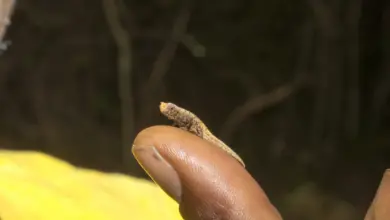
Our first new species of 2012 is actually four species—all of them very tiny chameleons that live on the Island of Madagascar. In fact, they may break the record for being the littlest reptiles in the world.
At this point, we’re a little over halfway through 2011, and so far, it’s been a good year for the discovery of new species of animals. Following are some lists of new species along with a few individual discoveries, and links to further information.
The International Institute for Species Exploration has published its 2011 annual list of Top 10 New Species. That list—of animals, plants, fungi, and bacteria, includes Darwin’s bark spider, which weaves the largest orb webs—25 meters, or around 25 yards long!—known to science. The silk used to weave the web is also twice as strong as that of any other spider. Darwin’s bark spider is found on the island of Madagascar, off the southeast coast of Africa.
Other creatures on the IISE’s list include: 2) The Sierra Madre Forest monitor lizard, AKA the golden spotted monitor lizard. Found only on Luzon Island, in the Philippines, this new reptile lives in trees, and grows to a length of 2 meters, or 6 feet, six inches. 3) The pollinating cricket, which was discovered on islands in the Mascarene Archipelago in the Indian Ocean. It gets its name from the fact that it pollinates an endangered orchid. 4) Walter’s duiker, a tiny antelope that turned up in a West African bushmeat market—a reminder that, in some cases, creatures are being killed off before scientists even know they exist. 5) The “T. Rex” leech, which has teeth—and which was discovered inside the nose of a little girl in Peru. 6) A jumping cockroach from South Africa called the “leaproach.” 7) The very weird looking pancake batfish from the Gulf of Mexico.
The Philippines seems to be a hotspot for new species, especially the Island of Luzon—probably because, not only do rain forests on this one island contain a lot of unknown species, but Luzon has been getting a lot of attention from biologists over the past couple of years. After all, you usually don’t find new things unless you’re looking for them. . . . In any case, Florida State University biologist Scott J. Steppan “discovered” 7 new species of mice native to Luzon by analyzing and comparing DNA from specimens captured in the wild.
The ScienceDaily website has reported on a number of new species recently. One of the most recent findings SD publicized was a group of four previously unknown jewel beetles discovered in Southeast Asia and Indonesia. Another “unknown beetle” find mentioned in ScienceDaily was that of two stream-dwelling beetles in Spain. A brand-new deep-sea lobster species and a new jumbo-size crayfish from the Southeastern U.S. also found their way onto the website.

Another website with frequent information about new species is one of our favorites: Mongabay.com. Recent Mongabay reports on new discoveries include
1) a new bee, Euglossa natesi, found in the Colombian rain forest, that has the longest tongue of any bee in the world. The new bee’s tongue, which measures 1.32 inches, or 33.76 millimeters, is used for dipping into orchids and sucking out the nectar.
2) The Garifuna big-eared bat, found on the Caribbean island of St. Vincent. According to scientists, it is such a good hunter it is able to snatch insects off of leaves and rocks.
3) A new lizard—a legless, eyeless one—from Cambodia, called the Daiai Mountain blind lizard.
4) Scientists working in Southeast Asia discovered two new species of pit viper. The two venomous snake species previously had been thought to belong to a third, already known, viper species. However, genetic testing proved that there were three distinct species rather than one. Cryptelytrops rubeus, one of the new vipers, was named for its ruby-red eyes. A viper is venomous snake that can fold its fangs into the back of its mouth.
5) Two extremely tiny frogs discovered on the island of Sri Lanka, also known as Ceylon. 6) A “new” species of wolf. This species has been hiding in plain site for a long time, mistaken for a jackal. However, this is yet another case in which genetic testing confirms an animal as being something other that what we previously considered it to be. The Egyptian jackal is actually an ancient species of wolf, distantly related to the Himalayan wolf.
Sneezing Monkey Found In Burma
Scientists in Myanmar—the South Asian country also called Burma—have discovered a news species of monkey that sneezes whenever it rains. The new primate is called the Burmese snub-nosed monkey, and apparently, whenever it rains, rainwater runs into the creature’s upturned nose, causing it to sneeze. Unfortunately, the new monkey may already be endangered due to hunting and deforestation.
Read about the new monkey here.
Miniature Wallaby Discovered
Researchers working in Indonesian New Guinea announced recently that they had discovered a miniature wallaby (above) that was by far the smallest member of the the kangaroo family. The discoverers of the animal, called Dorcopsulus, said that the creature was a beautiful and gentle wanderer of the forest floor.
A New American Turtle!
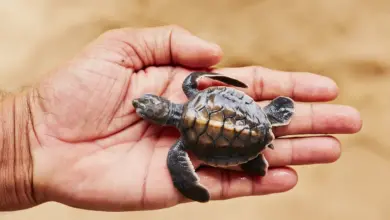
Scientists working for the US Geological Survey report that they have discovered a new species of map turtle in Mississippi’s Pearl River. Male Pearl River turtles are about the size of a tea saucer, while females grow to be as big as a dinner plate, the researchers report.
The Pearl River map turtle joins 56 other species of turtles that are native to the US. There are 13 map turtle species in the country, mostly in the Mississippi River drainage. Map turtles got their name because of the yellow lines on their shells, which resemble the lines on a map. They are also distinguished by a high ridge running the length of their upper shell.
The New Chameleon
Tanzania—specifically the Udzungu Moutains National Park region in that East African country—is home to one of the newest vertebrate species known to science. The new chameleon species, Kinyongia magomberae, the males of which sport a single blade-like horn on their snouts, was first observed by Dr. Andrew Marshall of the University of York in the UK. Dr. Marshall’s first encounter with the chameleon took place when he spotted one unfortunate member of the species in the process of being devoured by a snake. Live specimens were subsequently collected.
Prior to the discovery there were approximately 160 chameleon species worldwide. Now, apparently, there are approximately 161.
A ‘Brand-New’ Monkey
Researchers from the Wildlife Conservation Society turned up a ‘brand-new’ monkey species in northwestern Brazil earlier this year. The tiny (less than 3/4-pound, or 340-gram) Mura’s saddleback tamarin (Saguinus fuscicollis) was discovered living in the Purus and Madeira river basins in the Brazilian state of Amazonas. The primate is already considered to be under threat by development in its rainforest habitat.
Fearsome Fanged Frog
A large, bird-eating frog with fangs was just one of 163 new species discovered by World Wildlife Fund scientists working in Thailand’s Mekong River region. Males of the new frog species, Limnonectes megastomias, apparently use their fangs for fighting, as the researchers found several apparent combatants that bore scars, and some that were even missing limbs. Scientists know that the species preys on birds, because they found feathers in their feces. Would you like to see a quick slide show of some of these new Southeast Asian species? 12/2/09

A Giant, Cuddly Rat
Scientists exploring a crater on Mount Bosavi in New Guinea found a host of new species, including 16 frogs that had never before been seen, a new bat, and a giant, furry rat that was not afraid of humans. The Bosavi woolly rat, which measures about 82 centimeters (32 inches) in length and weighs around 1.5 kilos (3.3 pounds) even allowed itself to be picked up and cuddled by its discoverers. The creature showed no fear because it apparently had never seen people before. 12/2/09
World’s Tiniest Deer
The eastern slopes of Asia’s Himalaya Mountains have produced well over 350 new species of amphibians, birds, reptiles and mammals over the last decade. One of the most recent discoveries was a miniature muntjac—a type of Asian deer—that was proven by genetic testing not only to be a distinct species, but the world’s tiniest species of deer. the miniature muntjac reaches an adult weight of no more than 24 pounds (10.9 kilos), and a height of no more than 30 inches (76.2 cm). Another Himalayan discovery was a frog, Rhacophorus suffry, that uses its large webbed feet for gliding from tree to tree. 12/2/09
Two More Of The World’s Smallest
At less than half an inch (11.5 mm) in length, Hippocampus satomiae is the world’s smallest seahorse. It was discovered recently in the waters off of Derwan Island, near Indonesian Borneo. The pony-size seahorse was named after Satomi Onishi, the diving guide who collected the creature for biologists to get a look at.
And on the other side of the world, the world’s smallest snake, the Barbados threadsnake, Leptotyplops carlae, turned up on Barbados as well as a few neighboring islands. The threadsnake measures just 4.1 inches (104 mm) in length. 12/2/09