The 2024-2025 Global Bleaching Event: Where Coral Reefs Actually Stand Now

Photo: Unsplash (free-use license).
If you read only one piece of marine-conservation news this year, it should probably be about reefs. The 2024–2025 global bleaching event was the largest and longest in recorded history, and the structural picture for tropical reefs has shifted in ways that aren’t reversible on any human-relevant timescale. We’ve been sitting with this story for the last six months. Here’s what it actually looks like.
What just happened
NOAA declared a fourth global coral bleaching event in April 2024. By the time it was formally over, in late 2025, the event had:
- Affected coral reefs in more than 80 countries and territories.
- Caused bleaching across an estimated 83% of the world’s reef area at some point during the event.
- Run for roughly 20 months — the longest documented bleaching event on record.
- Pushed sea-surface temperatures across major reef regions to 2–3°C above the historical baseline for sustained periods.
For reference, the previous “worst” bleaching event was 2014–2017. Each of the four global bleaching events on record has been worse than the one before, and the gaps between them have shortened. There is no longer a “between” period that resembles pre-1998 conditions.
Bleaching, in plain English
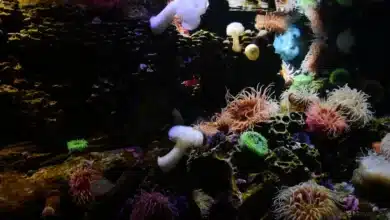
Coral animals — the tiny polyps that build reefs — live in symbiosis with single-celled algae called zooxanthellae. The algae photosynthesise and provide the coral with sugars; the coral provides the algae with shelter and nutrients. The relationship gives both partners more energy than either could get alone, and it’s the engine that lets reefs grow at the rates needed to outpace ocean erosion.
When water gets too warm — typically 1°C above the local summer maximum, sustained — the relationship breaks down. The coral expels the algae. The white skeleton shows through the now-translucent tissue. That’s bleaching.
Bleaching is not death. A bleached coral can recover if the heat stress eases within a few weeks. What changed in 2024–2025 is that, in many places, the heat stress did not ease. NOAA’s “degree heating weeks” measure — a running total of how much above-normal heat a reef has accumulated — passed thresholds in 2024 that we hadn’t seen before. Reefs that bleached in May were still bleached in November. Mortality, not recovery, became the default outcome.
What’s actually dead
The numbers are still being finalised — reef mortality assessment is slow, expensive, and necessarily lags the bleaching itself. The early estimates from the major monitoring networks:
- Great Barrier Reef — coral cover declines of around 25–35% in the most affected sectors, with the Northern and Central Great Barrier Reef worst hit. The Australian Institute of Marine Science’s late-2025 long-term monitoring report is the bleakest in their 40-year record.
- Caribbean — historically high mortality across Mesoamerican Reef sectors. Preliminary data from Belize and Mexico shows live coral cover dropping below 10% across surveyed sites — a benchmark we’d hoped to never see.
- Indian Ocean — Maldives and Chagos archipelago monitoring shows extensive structural damage; the resilient deeper-water reefs that survived 1998 are now also affected.
- Eastern Tropical Pacific — already-stressed reefs from the 2014–2017 event lost most remaining live coral.
The qualitative picture is bleaker than the percentages suggest. Many of the corals that bleached and survived are smaller, slower-growing, more disease-susceptible species — the structural reef-builders (large Acropora, branching corals that create three-dimensional habitat for fish) have been the worst hit, and they don’t come back quickly.
What lives, and what dies, on a damaged reef
The follow-on for fish and invertebrates is the part of the story that doesn’t make it into the bleaching headlines. A reef with 80% live coral cover supports a different community than the same reef with 30%, even if the fish themselves haven’t bleached. Specifically:
- Obligate corallivores — butterflyfish, the chevron tang, certain wrasses — collapse first.
- Reef-associated grouper and snapper populations contract as the structural complexity that gives juveniles refuge from predators is lost.
- Algae-grazing parrotfish and surgeonfish become structurally critical — they’re the only thing keeping a degraded reef from flipping into an algae-dominated state from which recovery is much harder.
- Sea turtles that depend on reef sponges (hawksbill) and seagrass-edge ecosystems (green) shift their foraging ranges; whether the new ranges are sufficient is an open question.
The shorthand we use on this beat: bleaching is the headline, but ecosystem reorganisation is the story.
What’s actually being tried
Selective breeding and assisted gene flow
Multiple programmes — SECORE, the Australian Institute of Marine Science’s “RRAP”, Mote Marine Laboratory in Florida — are breeding heat-tolerant coral genotypes and outplanting them. The science is real, the results at scale are still being demonstrated, and the cost per square metre is high. None of this is a substitute for slowing the heat stress.
Marine cloud brightening
Australian researchers have field-tested techniques to cool small areas of the Great Barrier Reef during peak heat events. Promising in pilot, expensive at scale, and an emergency-room intervention rather than a cure.
Local stress reduction
Sediment runoff control, water-quality management, fishing-pressure controls, and crown-of-thorns starfish removal don’t stop bleaching but they meaningfully change a reef’s recovery odds. They are also, by far, the most cost-effective interventions available. Boring, unglamorous, and doing more for living coral than any of the high-tech fixes.
Climate
The honest answer for any reef story now is that nothing else matters as much as the global temperature trajectory. The reefs that exist in 2070 will be the ones that happened to have the right combination of depth, current, genetic diversity, and local stress reduction. Every other intervention either buys time or does nothing.
What you can actually do
- If you dive or snorkel: don’t touch, don’t anchor on coral, use reef-safe sunscreen (oxybenzone-free), pick operators that brief properly. None of this saves a reef from bleaching, but it stops you from making the recovery harder.
- If you eat seafood: the Marine Stewardship Council and Seafood Watch databases are the simplest way to avoid contributing to overfishing of reef-associated species.
- Donate to the small set of organisations doing on-the-water reef monitoring and restoration. Coral Reef Alliance, the Reef Resilience Network, and AIMS’s research programmes are where the work is.
- The hard one: vote and act on climate at every level. Reef futures are, fundamentally, a climate-policy question now.
The longer view
Reefs have come through warming events before — the Pleistocene record contains repeated bleaching-and-recovery cycles over tens of thousands of years. The biological capacity to recover is real. What’s different now is the rate. We are pushing reef ecosystems through a thermal regime change in a few decades that, in the geological record, played out over millennia. Species that have the genetic variation to track that change will. Many won’t.
The 2026–2030 window will, on current trajectories, see another global bleaching event. The structural question for the next decade is not whether reefs will continue to bleach but which reefs will continue to function as reefs.
Reading further
For more from our marine archive: Marine Wildlife covers the broader picture, our coverage of dolphins and whales shares many of the same structural concerns, and our earlier piece on the future of reefs is the precursor to this one.
External: NOAA Coral Reef Watch publishes the underlying heat-stress data in near-real-time, and the Global Coral Reef Monitoring Network aggregates the field-survey data.
If you have field photos, transect data, or stories from the 2024–2025 event, we’d genuinely like to hear from you — contact form is here.
— Priya Mahato, marine wildlife