Photo: Unsplash (free-use license).
The endangered species story rarely moves in straight lines. Some species recover faster than anyone expected. Others slip onto the list quietly and stay there for decades. Below, a clear-eyed look at what’s changed on the IUCN Red List and the U.S. Endangered Species Act in the last twelve months — and why the headlines often miss the more important shifts.
The headline numbers
As of early 2026, the IUCN Red List counts more than 47,000 species threatened with extinction — that’s roughly 28% of the species the IUCN has actually assessed. The total of assessed species is well past 170,000, and the assessed pool grows every year, which means the threatened count grows even when the underlying biology hasn’t changed. We say this up front because the “more species are endangered” headline you’ll see in early 2026 is partly real and partly an artefact of more species being looked at for the first time.
On the U.S. side, the Endangered Species Act now lists about 1,700 species — the bulk of them plants. Both the listing process and the de-listing process are slower than the science, which is something the team and I have been writing about for years. (Esme has more on the policy side in this piece on the federal poaching response.)
What moved up the threat ladder this year
African forest elephant
Listed Critically Endangered since 2021, the African forest elephant remains the most worrying of the elephant lineages. The latest population work — drawn from dung-DNA surveys across the Congo Basin — keeps the central African population under 100,000, with recovery slower than even pessimistic models predicted. Poaching is no longer the leading driver in most range states; ivory demand has dropped, but habitat fragmentation hasn’t. We covered the broader picture in our coverage of the African ivory crisis.
Sumatran orangutan
Still Critically Endangered, with new estimates putting wild numbers at around 13,400. Forest loss in Aceh remains the operative variable; conservation areas are working where they’re enforced and not working where they aren’t. There’s a reason this species sits on every “ten most endangered” list — there genuinely aren’t very many of them.
Eastern hellbender
The U.S. salamander that nobody outside the herp world thinks about. Reclassified upward this year on the basis of stream-quality declines across Appalachia. It’s a quiet story that tells you almost everything about where U.S. ESA enforcement is headed.
Vaquita
The smallest porpoise in the world, with an estimated population of fewer than 10 individuals. Our marine reporter Priya has covered the Vaquita beat for years, including this longer treatment of the species. There are still some very hard conversations happening about whether the species is still recoverable in the wild.
Genuine recovery stories
Conservation only ever gets oxygen when something dies — but the species that came back are the ones we should actually be studying.
Giant panda
The wild population is around 1,860 individuals and rising slowly. The species was downgraded from Endangered to Vulnerable on the IUCN Red List in 2016 and has held that line. This is what twenty years of habitat protection and enforcement actually looks like, and it is uncommonly hopeful.
Mountain gorilla
Around 1,063 individuals across the Virunga Massif and Bwindi — up from a low of about 250 in the late 1980s. The species remains Endangered, but the trend is genuinely positive. Anti-poaching, eco-tourism revenue, and cross-border cooperation between Uganda, Rwanda and the DRC are the unglamorous reasons why.
Bald eagle
Removed from the U.S. ESA in 2007 and now estimated at well over 300,000 individuals across North America. A textbook case of single-issue legislation (the DDT ban) producing a measurable wildlife outcome.
Where the list is going next
Three structural shifts to watch:
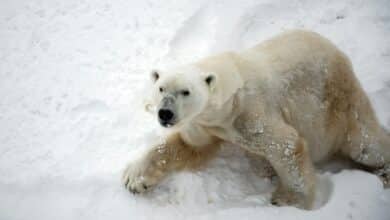
- Climate-driven listings. Species like the polar bear and the American pika make the news, but the bigger 2026–2027 wave will be reef-associated fish and intertidal invertebrates. The IUCN’s marine team has been signalling this for two years.
- Insect declines making it into formal status reviews. Western monarch butterflies, multiple bee species, freshwater mussels — the assessments are catching up with the field data.
- Reassessments removing species that were never well-studied to begin with. Several “Data Deficient” listings are likely to be moved either way as eDNA work fills in baseline numbers.
What you can do that actually matters
This is the section we always agonise over, because most of the “ten things you can do for endangered species” lists are useless. A short, honest version:
- Donate to the actual conservation NGO doing the unglamorous on-the-ground work in your region of interest — not the one with the largest marketing budget.
- Support habitat-level land protection in your own country before sending money overseas. Local conservation tends to be the most cost-effective per species saved.
- Read primary sources. The IUCN Red List is free and public; U.S. Fish and Wildlife publishes every status review. You’ll learn more in an afternoon there than in a year of media coverage.
- If you photograph wildlife, submit your records to GBIF or your national equivalent. Citizen-science records genuinely change assessments.
The honest summary
The 2026 list is, broadly, more species threatened than last year. That’s partly because the biology is bad and partly because we’re looking at more taxa. The arc inside the data is more interesting: a small set of well-funded, well-managed species are recovering, a much larger set of poorly-funded species are sliding sideways, and the marine and insect realms are where the next big lurch will come.
If you’re new to the magazine, the easiest place to dig in further is our endangered species archive, which we keep updated; or our coverage of marine wildlife, where the most under-reported stories on this list actually live.
We’ll keep tracking this through 2026. If we get something wrong, please tell us; the corrections inbox is the most important one we run.
— Liam Trent, managing editor