ANOTHER GREAT EXTINCTION?

An Extinct Animal: A Woolly Mammoth Model At The Royal British Columbia Museum. Photo: WolfmanSF
Are Large Numbers Of Our Earth’s Animal Species Going To Go Extinct?
It may already be happening. Many scientists believe that the earth likely is spinning on the verge of a mass extinction of animal species—something that has occurred five times since life originated on the planet. The most famous mass extinction is also the most recent—it was the one that swept dinosaurs from the face of the earth more than 65 million years ago.
Each mass extinction has destroyed well over half—up to 90 percent—of all the earth’s species. There have also been many lesser extinction events, including the one that carried off the woolly mammoth and many other ice-age species 10 to 15 thousand years ago.
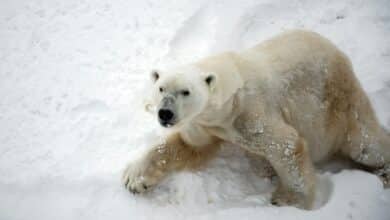
While the planet’s biodiversity—its total number of species—probably has never been higher, human activity has been squeezing a large percentage of these organisms toward the edge of existence. Problems related to humans such as widespread habitat loss, illegal hunting, and climate change are having a particularly strong impact on the world’s large mammals—everything from elephants to polar bears. This is because large animals produce fewer young and need to range over larger areas in order to survive. But all sizes of animals are being affected. According to biologists at Stanford University, as many as one-third of the world’s vertebrate species currently are Threatened or Endangered.
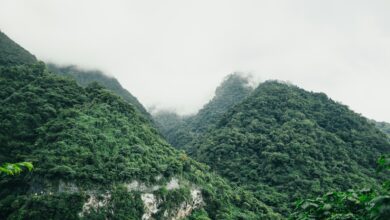
Things are also quite tough for invertebrates. The Stanford scientists estimate that there are 45 percent fewer individual invertebrate animals in the world—such creatures as insects, spiders, and worms—than there were just 35 years ago. Researchers think that hundreds if not thousands of invertebrate species as well as smaller vertebrates such as amphibians are going extinct each year in the world’s rain forests and other habitats without even having been discovered by science.
But the loss of our largest animals is especially troubling not only because they are the creatures we tend to find most appealing, but also because entire ecosystems are disrupted when their large animals disappear.
According to a Stanford News Service article, “. . . experiments conducted in Kenya have isolated patches of land from megafauna such as zebras, giraffes and elephants, and observed how an ecosystem reacts to the removal of its largest species. Rather quickly, these areas become overwhelmed with rodents. Grass and shrubs increase and the rate of soil compaction decreases. Seeds and shelter become more easily available, and the risk of predation drops.”