HELP SAVE THE RAIN FORESTS

Rain Forest Palm Oil Plantations Are Displacing And Killing Wildlife On Two Continents. Photo: Tony Hisgett
Something Easy You Can Do Right Now To Protect Rain Forests And Save Wildlife
Many of us hear about the destruction of rain forests and the resulting losses of wildlife and biodiversity, and we feel helpless. After all, it’s a huge problem, it’s happening far away from us, and the trees are being cut by people with money, political power, and a strong economic incentive to continue clearing the land. Although we can (and should) donate to the Nature Conservancy, the World Wildlife Fund, and other conservation organizations, we are not rich, and there’s a limit to what we can give.
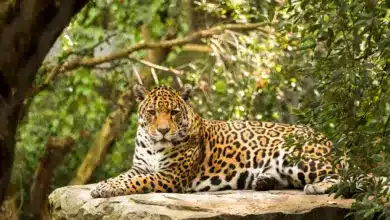
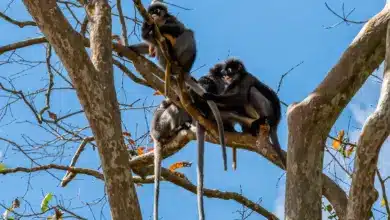
Recently, however, people interested in preserving rain forests in Africa, Indonesia, and Malaysia—rapidly shrinking forests that are home to all the great ape species as well as thousands of other animals including tigers, leopards, and parrots—began to receive some good news. There are strong indications that a worldwide grassroots campaign involving ordinary people with an interest in rainforest conservation is helping to change the behavior of some of the large companies that are indirectly responsible for much of the rainforest destruction. One way anyone can join this campaign is by adding their name to petitions being circulated online by a number of organizations, including one called Forest Heroes.
Although this success sounds almost too good to be true, the campaign is working for a specific, logical reason. One of the main motives for the clearing of virgin rain forests in Indonesia, Malaysia and, increasingly, in Africa, is to make room for vast plantations that produce palm oil—a cooking oil widely used in the food and fast-food industries. And because almost all the customers of the companies in these industries are ordinary people like us, when large numbers of us become concerned about something, they have to listen to us if they want us to keep buying their products. E-mails, letters, phone calls, online petitions, and other communications from regular people are showing these companies just how worried we are about rainforest destruction, and as a result, some of them have started seeking alternatives to palm oil produced on recently cleared rainforest land. This has had the important effect of slowing the destruction of rain forests for the purpose of creating new plantations.
As reported in the New York Times, 40 companies including Kellogg, Nestlé, and L’Oréal recently pledged to help cut rainforest destruction in half over the next five years, with the goal of eliminating it altogether by 2030. Among those signing the agreement were agricultural and food giant Cargill and several more of the world’s largest consumers of palm oil.
Forest Heroes targets its petitions toward individual companies that use palm oil—most recently, donut retailers Dunkin’ Donuts, Krispy Kreme, and Tim Hortons—asking them to source their cooking oils from environmentally friendly suppliers.
But there are a number of other organizations that are collecting petition signatures as well. Here is just a partial list, with links: Rainforest Rescue, Say No To Palm Oil, A-Z-Animals Palm Oil Campaign (Europe), Palm Oil Action Australia (Australia) Green Palm, and Palm Oil Petitions (a list, like this one, with links.)
Many countries other than the U.S. and Canada have their own conservation organizations dedicated to rainforest conservation. Wherever you are, an online search via Google or another search engine might help you turn up a number of palm-oil petitions—and there’s no reason not to sign more than one. In fact, you could sign all of them—and get your classmates, friends, and relatives to sign them as well.
The international palm-oil campaign is demonstrating that there truly is strength in numbers.