Animals Saved by The U.S Endangered Species Act
Alligators, Whooping Cranes, Bald Eagles, Peregrine Falcons, Wolves, Grizzly Bears, And California Condors Were All Saved By The ESA

The 1960s brought the first truly widespread emergence of consciousness and regret concerning the fact that many the world’s species were plunging toward extinction at an alarming rate. In the U.S., the 1962 publication of Rachel Carson’s book, Silent Spring, alerted the American public to the fact that we were killing much of our wildlife—primarily birds—through the indiscriminate use of pesticides, particularly DDT. In the face of withering attacks and disinformation from the chemical industry, Carson calmly and clearly laid out the scientific proof that DDT inevitably worked its way up the food chain, accumulating in such toxic amounts in the bodies of birds and high-level predators that the creatures were no longer able to reproduce. She pointed out that eagles, falcons, hawks, and other birds of prey were fast flying toward extinction because of the fact that DDT was weakening the shells of their eggs to the point that they easily shattered when the mother tried to incubate them. Her work resulted in a ban on the use of DDT in the U.S.—though it did not prohibit U.S. manufacturers of the pesticide from selling it abroad.
[ez-toc]
The federal Endangered Species Preservation Act of 1966 empowered the U.S. Secretary of the Interior to protect native species that were in danger of going extinct. Vanishing animals, plants, and their ecosystems got a further assist in 1973 when President Richard Nixon signed into law the Endangered Species Act (ESA), which gave strong protections to native species and established a federal listing system of officially “Threatened” and “Endangered” species.
Silent Spring, the Endangered Species Preservation Act, and the ESA, along with the public awareness they all inspired, came none too soon for a number of species that had been about to step off the earth into the permanent darkness of extinction:
The American Alligator
The earliest Spanish explorers of Florida and the Gulf Coast called this dark, toothy, potentially dangerous, creature “el largarto,” or “the lizard,” which seems almost to be a title of respect. Then along came clumsy-tongued Anglos, who adopted the Spanish name, but changed it slightly to “alligator” so it would be easier for them to pronounce.
Alligators originally were numerous, but their numbers shrank rapidly as people hunted them down in the interest of converting their leathery skin into handsome shoes and handbags; by the 1960s they were almost gone. Fortunately for these ancient reptiles, which had existed for hundreds of millions of years before people evolved sufficiently to develop language, “discover” them, and give them a name, the Endangered Species Preservation Act was passed just in time to keep them from disappearing altogether. Alligators came under Preservation Act protection in 1967, and hunting ceased—which was almost all this adaptable and fairly prolific species really needed to get started again.
In 1987—a mere 20 years later—the alligator was removed from the federal list of endangered species, and is considered one of the ESA’s greatest success stories. There are now millions of alligators throughout the Southeastern U.S.—so many that they sometimes give people a scare by wandering into their back yards. Very occasionally, an alligator even attacks a human; more frequently, they prey on untended house pets.
Whooping Cranes
The whooping crane was another, at least partial, success of the Endangered Species Preservation Act. With a stature of about 5 feet, whooping cranes are the tallest North American bird; they are also one of only two crane species native to the continent, the other being the sandhill crane.
Whooping cranes historically wintered along the Gulf Coast and occupied a breeding range throughout western Canada and the Dakotas to as far south and east as Illinois. They like to build elevated nests in marshy areas.
The crane’s first big shove toward extinction came from hunters supplying the millinery industry, which prized crane feathers as decorations on ladies’ hats. Even after the hunting of cranes was outlawed in the early 1900s, the species continued to suffer from habitat loss, and by 1941, only 16 of the birds remained.
Following their 1967 protection under the precursor to the ESA, the surviving whooping cranes were rounded up for captive breeding. One early experimental attempt—that of placing whooping crane eggs in the nests of more numerous sandhill cranes—failed miserably because of the fact that the hatchlings became socially bonded to sandhills rather than to others of their own kind, and did not reproduce as adults.
Currently, a few hundred whooping cranes are back in the wild, living in several distinct breeding and migrating populations. In some cases, cranes have had to relearn their ancestral migration routes by following ultralight aircraft piloted by wildlife biologists.
The Bald Eagle And The Peregrine Falcon
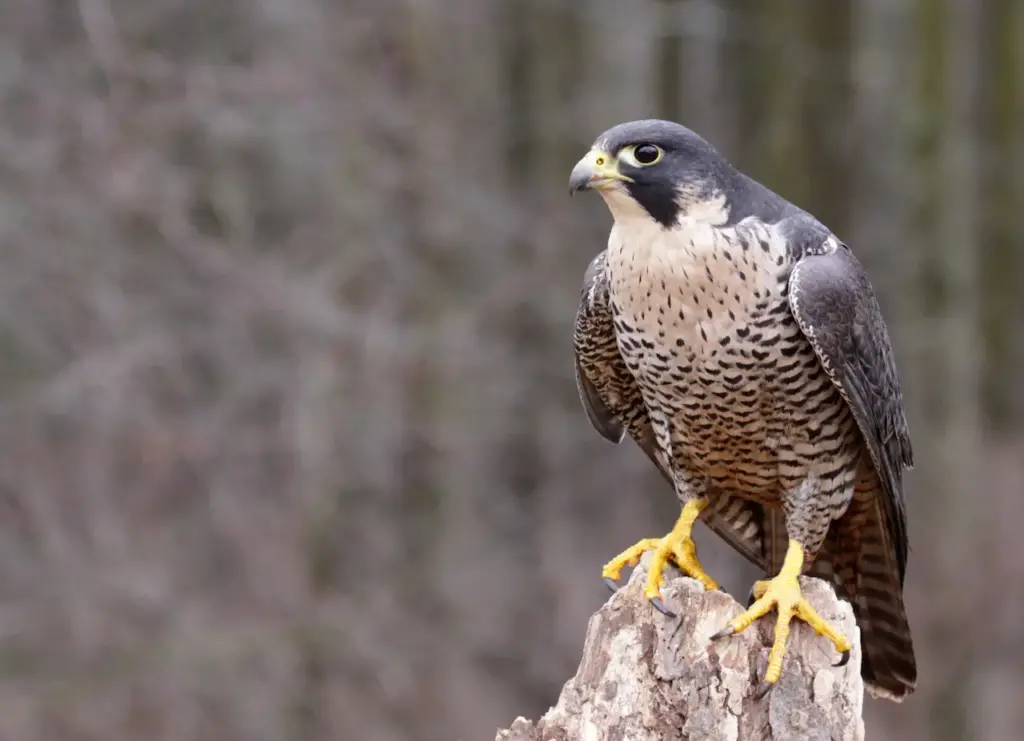
Both of these magnificent birds of prey almost went extinct in America’s Lower 48 states as a direct result of the use of DDT, which accumulated in their bodies and made the shells of their eggs so weak that, in trying to incubate them, they would instead crush them.
The bald eagle, symbol of America, was down to just 417 breeding pairs in the Lower 48 states by 1963 due to the effects of the insecticide. Falcon populations crashed at the same time and for the same reason in the U.S. and many other countries; conservationists had to resort to the desperate, last-ditch method of captive breeding in order to keep falcons from going extinct. But both species made recoveries in the wake of the ESA and the 1970s ban on the use of DDT in the U.S. The eagle’s comeback was spectacular, and U.S. Fish & Wildlife Service reports that there are currently 10,000 breeding pairs of bald eagles in the Lower 48.
Peregrines are also doing well in the U.S., and now are even seen in many cities, where they prey on pigeons. In some countries, however—most noticeably in Europe—their numbers continue to decline.
The Grizzly Bear
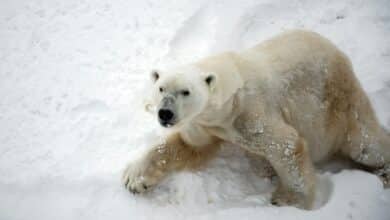
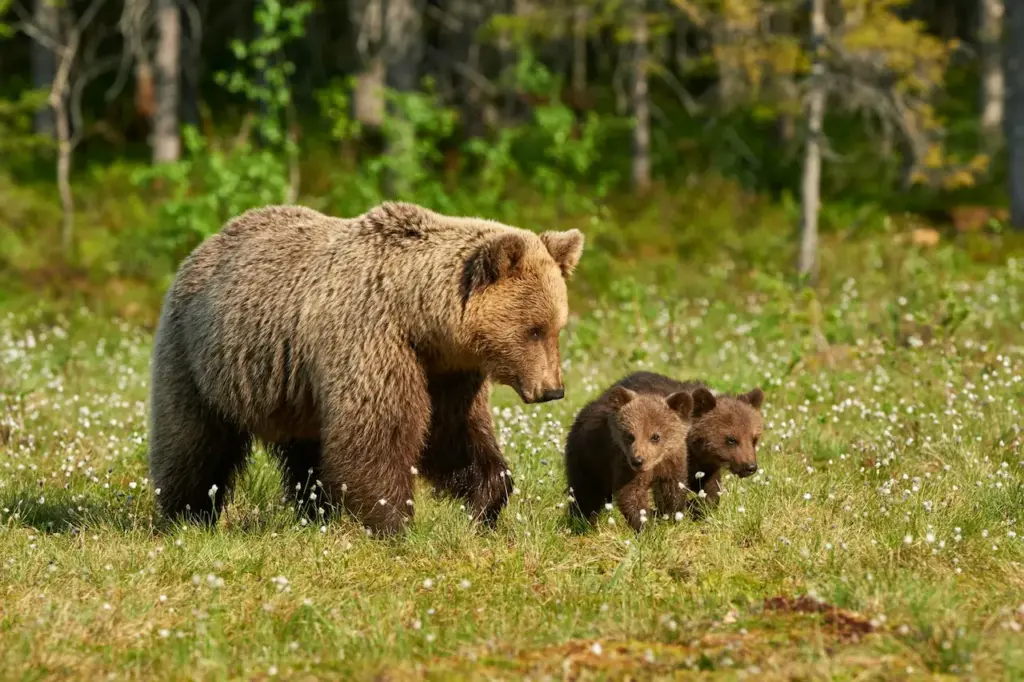
Weighing in at up to 600 pounds for a full-grown male, the grizzly bear is the undisputed top, or apex, predator of the western U.S. and Canada. Most other hunters—wolves, mountain lions and black bears among them—will abandon a kill rather than dispute its ownership with a grizzly. For a long period of time, however, there weren’t very many grizzlies to help themselves to other predators’ meals; in fact, during the 1970s the big bear’s entire population had dropped to around 140, mostly in Yellowstone National Park—down from perhaps 50,000 that roamed the West at the time of Lewis and Clark’s expedition. The last member of perhaps the most famous grizzly bear population, the “golden” grizzlies of California, was shot in the 1920s—although the golden bear will probably always continue to exist on the California state flag. It looked as if the grizzly was on it’s way out evolution’s back door, seemingly too big and too insistent on having its own way to fit in with civilization.
But then civilization, in a rare act of generosity toward another species, decided to adapt. In 1975, the grizzly was placed under the protection of the two-year-old ESA, which prohibited the killing of grizzlies and—at least as important—mandated the conservation of grizzly bear habitat. Since then, federal protection, combined with the cooperation of the public, has brought about an impressive recovery for the species. The population has grown to around 600 bears in the greater Yellowstone area, with perhaps another 600-800 bears elsewhere in the Rocky Mountain West including Idaho, Montana, Washington, and southeastern British Columbia.
So well have grizzlies recovered, in fact, that the U.S. Fish & Wildlife Service removed them from ESA protection in 2007, thereby angering conservationists who insisted that the bear’s numbers would start to plummet once again. Although a federal judge later ordered grizzlies back onto the endangered species list, the animal’s status is likely to remain a contentious issue for many years.
The American Gray Wolf
The gray wolf was another Western predator that fared poorly in the face of a growing, livestock-raising human population. Wolves were persecuted mercilessly wherever settlers encountered them—exterminated with bullets, traps and poison, until, by the 1930s they were virtually extinct in the Lower 48 States.
ESA protection for wolves in 1974 allowed a small population on Isle Royale in northern Minnesota to begin rebuilding, and it also allowed biologists to resettle some Canadian wolves in Yellowstone National Park, from which they had been absent for decades. Not only did the transplanted wolves thrive, but once the shooting and trapping stopped, other Canadian wolves found there own way across the border and recolonized areas of the American Rockies very far from Yellowstone.
By the second decade of the twenty-first century, around 5,000 wolves roamed the Lower 48, with about 1,600 in Yellowstone and the rest of the U.S. Rockies, and the remainder in Minnesota—a population large enough, at least in the cattle-raising West, to trigger a public, and often bitter, debate about how many wolves constituted too many wolves. Conservationists continue to argue that renewed legal hunting would cause the population to nosedive once more.
Eastern Red Wolves
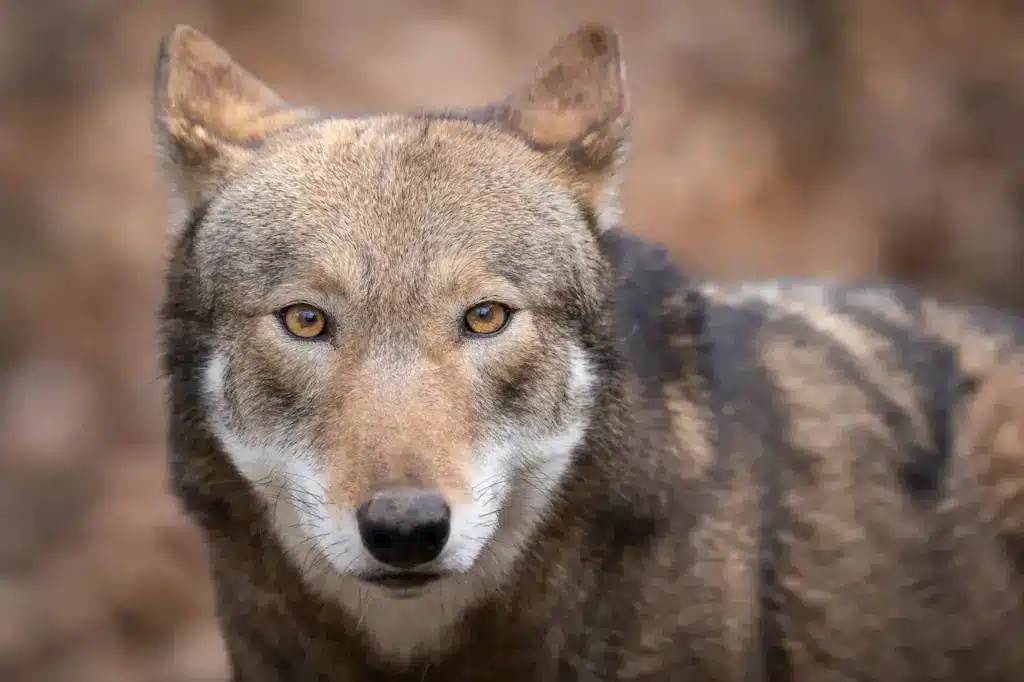
The Eastern, or “red,” wolf is a distinct species from its Western cousin. It’s smaller, for one thing; in fact, genetic testing has shown it to be much more closely related to the coyote than it is to the gray wolf. Eastern wolves—not all of which are red, despite the name—used to be common from Maine to the Gulf Coast. Humans made short work of them, however, and by the 1970s only a ghostly, beleaguered population numbering in the teens remained at large in a strip of coastal eastern Texas.
Following passage of the ESA, these surviving red wolves were rounded up and taken into a successful captive reproduction program that eventually expanded to include some 30 breeding facilities that have released around 100 red wolves back into the wild, mostly in North Carolina. Although the red wolf’s population is on the increase, both in and outside of captivity, conservationists remain concerned about the species’ prospects for survival, with serious challenges coming from a lack of suitable habitat as well as from the animal’s vulnerability to cross-breeding with coyotes, thereby losing it’s genetic integrity.
The California Condor Waddles Back
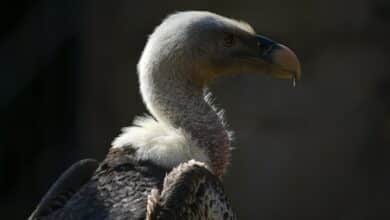
The California condor is a bare-headed member of the vulture family which, while looking quite unappealingly vulture-like as it hops and waddles on the ground—and especially while it is deconstructing a carcass with it’s large, curved beak—nonetheless appears quite majestic when engaged in soaring, long-winged flight over desolate Western canyons. In fact, it has the widest wingspan of all North American birds, at 9.5 feet, or 2.9 meters. It is also one of the continent’s heaviest birds, weighing up to 23 pounds, or 10.4 kilos, which is also close to the maximum size for an adult male wild turkey.
The condor’s appearance and dining habits made it few friends throughout most of modern American history, and by the second half of the twentieth century it was almost gone, the victim of habitat loss, intentional persecution by humans, and lead poisoning resulting from feeding on animals had been killed or crippled by a blast of lead shotgun pellets. Finally, in 1987, the last 22 condors were captured and divided between captive breeding programs at the Los Angeles Zoo and the San Diego Wild Animal Park. Condor hatchlings were reared by human handlers who fed them with puppets resembling condor heads so that they would not become “imprinted” on—or socially bonded to—people rather than to other condors.
Reproduction was successful enough that, beginning in 1991, condors began to be re-released back into the wild. Although there are now around 200 of the birds living in their natural habitat, the California condor is still one of the rarest birds on the planet.