AMERICAN BATS FACE FATAL DISEASE

by Editor on December 14, 2009

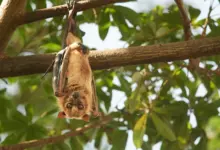
Bat Affected By Fatal Fungal Illness. Photo:USFWS

Bat Affected By Fatal Fungal Illness. Photo:USFWS

The US Fish and Wildlife Service (USFWS) plans to take steps this winter to prevent the spread of white-nose disease, a fatal fungal illness that strikes bats in the their hibernation caves in the eastern US. USFWS thinks people may be unwittingly spreading the illness.

Not To The Bat Cave

The US Fish & Wildlife Services thinks it’s best if people in the eastern US stay out of caves and mines where bats are hibernating this winter. A set of new rules proposed by the federal wildlife agency are not for the protection of people; they’re an attempt to keep thousands more bats from dying of a fast-spreading fatal disease.

A fungal illness called white-nose disease has killed hundreds of thousands of bats in the eastern US since it was first discovered in 2006. Bats that have succumbed to the disease include up to one-third of the Northeast’s population of Indiana bats, which are are listed as a US endangered species. White-nose disease is named for its most prominent symptom: A patch of white fungus that appears on the faces of hibernating bats that have been infected. Other symptoms include unusual behavior among the bats, including flying during daylight hours, flying during the winter when they are usually hibernating and when there are no insects available, roosting in the coldest parts of a cave, and excessive grooming.

There is no cure for the disease, and wildlife biologists are seeking ways to prevent it from spreading. Although bats are thought to contract white-nose disease from other bats, scientists are also concerned that the fungus may hitch a ride on humans who travel from an infected bat roost to an uninfected one.

As a precaution, USFWS is proposing to ban human access to many infected bat lairs, and to reduce access to many others.

White-nose disease first appeared in the Northeast, where it has devastated bat populations. It is now affecting bat colonies from New York, Vermont and New Hampshire south to Virginia, and has been spreading further toward the Southeast and to the Midwest.

{ 0 comments }

MONEY BELT HOLDS SMUGGLED SPECIES

by Editor on December 9, 2009

An Australian Gecko In Its Native Habitat. Photo:Calistemon

An Australian Gecko In Its Native Habitat. Photo:Calistemon

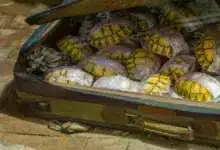
Federal authorities report that they arrested an arriving passenger at Los Angeles International Airport after they discovered that his clothing concealed a money belt in which he had allegedly stuffed 15 lizards from Australia, including two monitor lizards that are protected under the Convention on International Trade in Endangered Species (CITES).

The Smuggling Of Wild Birds And Animals For Sale In The Pet Trade Is A Form Of Poaching

A money belt found around the torso of a California man returning from Australia to the US via Los Angeles International Airport was allegedly packed with lizards from Down Under. According the the US Fish & Wildlife Service, the 15 smuggled reptiles, including 11 skinks, 2 geckos and two monitor lizards have a value of $8,500 in the US pet market.

The two monitor lizards are protected under CITES, the Convention on international Trade in Endangered Species. The other 13 creatures are protected by Australian law, which requires an export license for all native reptiles leaving the country. The suspect, 40 year old Michael Plank, of Lomita, California, allegedly lacked those export licenses.

Plank, whose arrest occurred in late November, could face up to 20 years in prison and a $250,000 fine if convicted of the felony counts with which he has been charged.

The capture of vulnerable wildlife for sale in the pet trade is a crime every bit as serious as the illegal killing of wild animals for their body parts. In some cases, the illegal pet trade has the potential to push threatened or endangered species closer to the brink of extinction.

Read more about endangered species and the pet trade.

{ 0 comments }

NEWLY DISCOVERED ANIMAL SPECIES

by Editor on December 2, 2009

Newly Discovered Chameleon. Photo: University of York

Newly Discovered Chameleon. Photo: University of York

The conceit that the natural world has already been fully explored is nothing but an illusion. In fact, science is constantly discovering new species of animals in environments ranging from rainforests to deserts. Starting today, All About Wildlife.com will be keeping a running list of new species. We will also run photos of these species if and when they are available to us. To see our frequent updates, just click “New Species” in the navigation bar.

The New Chameleon

Tanzania—specifically the Udzungu Moutains National Park region in that East African country—is home to one of the newest vertebrate species known to science. The new chameleon species, Kinyongia magomberae, the males of which sport a single blade-like horn on their snouts, was first observed by Dr. Andrew Marshall of the University of York in the UK. Dr. Marshall’s first encounter with the chameleon took place when he spotted one unfortunate member of the species in the process of being devoured by a snake. Live specimens were subsequently collected.

Prior to the discovery there were approximately 160 chameleon species worldwide. Now, apparently, there are approximately 161. 12/2/09

A ‘Brand-New’ Monkey

Researchers from the Wildlife Conservation Society turned up a ‘brand-new’ monkey species in northwestern Brazil earlier this year. The tiny (less than 3/4-pound, or 340-gram) Mura’s saddleback tamarin (Saguinus fuscicollis) was discovered living in the Purus and Madeira river basins in the Brazilian state of Amazonas. The primate is already considered to be under threat by development in its rainforest habitat. 12/2/09

Fearsome Fanged Frog

A large, bird-eating frog with fangs was just one of 163 new species discovered by World Wildlife Fund scientists working in Thailand’s Mekong River region. Males of the new frog species, Limnonectes megastomias, apparently use their fangs for fighting, as the researchers found several apparent combatants that bore scars, and some that were even missing limbs. Scientists know that the species preys on birds, because they found feathers in their feces. Would you like to see a quick slide show of some of these new Southeast Asian species? 12/2/09 [click to continue…]

{ 0 comments }

TIGER EXTINCTION WOULD BE CHINA’S FAULT

by Editor on November 19, 2009

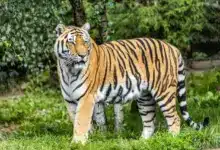
Sumatran Tiger. Photo:Merbabu

Sumatran Tiger. Photo:Merbabu

I t has been politically correct to say that the world’s remaining tigers are being illegally slaughtered so their body parts can be used to make “Asian folk medicines.” But the truth is that China comprises almost the entire market for tiger parts, and the decision concerning whether the tiger goes extinct in the wild rests solely on the Chinese government.

The Tiger’s Story: China Could Be the Hero—Or The Villain—For All Eternity

BY PAUL GUERNSEY

Tigers in the wild are sliding toward becoming extinct within as few as 10 years. But the Chinese government could prevent their extinction almost single-handedly.

As evidence, international tiger conservationist Judy Mills points to the effectiveness—ruthlessness might be a better term—with which the Chinese rescued the giant panda from the brink of extinction. During the 1980’s and early 1990’s, when it became clear that the illegal hunting of pandas and the trafficking of their parts was about to push China’s most emblematic animal off the face of the earth, the country’s government did two things. First, it launched a massive public-education campaign to teach the Chinese people about the importance of the panda, and to make it socially unacceptable to purchase panda products. Secondly, the government cracked down on panda poachers and traffickers—and it cracked down hard. A few people were even executed for panda-connected offenses.

The result was that the illegal killing of pandas was effectively eliminated, leaving critical habitat loss as the panda’s main roadblock to recovery as a species.


“They practice speed-breeding,” Mills said. “The baby tigers are suckled on pigs and dogs so that the mother can be bred again more quickly.”


Mills, who coordinates the International Tiger Coalition, said in an interview with All About Wildlife.com that tigers don’t have the same habitat problems as pandas; in fact, she said, while there are just above 3,000 tigers remaining in the wild throughout all of Asia, there probably exists sufficient, suitable habitat for 20,000 of the animals in India alone.

“There’s plenty of habitat, and they breed like cats,” said Mills, whose group comprises an alliance of 40 organizations dedicated to halting the trafficking of tigers and their parts. “What we need to do is to stop poaching tigers and their prey.” [click to continue…]

{ 0 comments }

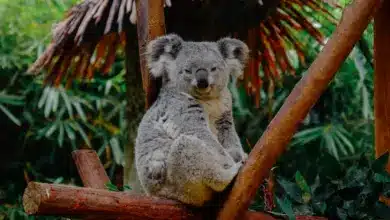
Conservationists Deliver An Alarming Report On An Emblematic Australian Species. Photo: Eric Veland

Conservationists Deliver An Alarming Report On An Emblematic Australian Species. Photo: Eric Veland

The Australian Koala Foundation reports that thousands of koalas are “missing” from the country’s eucalyptus forests. Koalas face an array of problems including habitat loss, and conservationists want the government to take action by listing the winsome marsupial as a vulnerable species.

Where Have All The Koala Bears Gone?

Australian conservationists concerned over the plight of the koala bear report that populations of the animal are between 20 percent and 50 percent lower than previous estimates. Scientists who surveyed koalas and koala habitat for the Australian Koala Foundation recently concluded that no more than 80,000 koalas remain in the wild in Australia, and that the total population may number as few as 48,000.

Prior to the release of the Foundation’s figures last week, koalas were thought to number around 100,000 in the wild. The Foundation now wants the Australian government to declare the koala a “Vulnerable” species, a move which would cover the creatures with a stronger set of legal protections than they currently enjoy.

According to the Foundation, the animal has suffered extensive habitat loss as the eucalyptus forests it depends on for survival are cut down to make room for houses, roads and agriculture. But the koala—which along with the kangaroo stands as an international symbol for Australia—faces a host of other problems as well. For instance, the Foundation says 4,000 koalas a year are killed by cars and dogs. Others fall victim to wildfires and disease.

Visit the Australian Koala Foundation website.

“Green” Questions—And “Green” Answers

Trying to live an environmentally responsible life can be both complicated and time-consuming. But a new website, GreenAnswers.com, is here to help. If you’ve got questions about anything having to do with the environmental or “green” living, GreenAnswers.com will try to get the answers for you. And if you’re knowledgeable in some aspect of the environment, GreenAnswers.com welcomes you to share what you know. Give them a peek right here.

{ 0 comments }

Kamayurá Tribesmen In Ceremonial Dress. Photo:Noel Villas Boas

Kamayurá Tribesmen In Ceremonial Dress. Photo:Noel Villas Boas

Although the fishing, and life in general, in Brazil’s vast Xingu National Park is much harder than it once was due to rapidly changing environmental conditions, the native Kamayurá people still have enough to eat, friends of the tribe assure us. One friend adds that the Indians also have a fondness for telling tall-ish tales to visiting newspaper reporters . . .

A New York Times Reporter Gets “Punked” By An Amazon Tribe—And Misses The Complexity Of A Region’s Environmental Problems

BY PAUL GUERNSEY

A New York Times environmental reporter visited Brazil’s Kamayurá Indian tribe last June to research an article about global climate change and came away with a page-one story of an Amazon rainforest people seemingly on the edge of starvation. She pinned the tribe’s woes on “hotter and drier” conditions throughout the Amazon that had “decimated” the fish stocks they depend on to survive.

But the Texas-born Brazilian rancher who took Elisabeth Rosenthal to see the Kamayurá told All About Wildlife.com that in their conversations with the reporter, the Indians innocently spoofed her about their “hunger” by telling her a few tall tales.

One of the things the reporter implied in her July 24 front-page Times article was that hunger had reduced Kamayurá children to eating ants. She also quoted the tribe’s chief as saying that the ants themselves were becoming scarce, and that, while monkey meat provided another alternative to fish, the carcasses of 30 monkeys were required to satisfy a person’s hunger.

Ms. Rosenthal also failed to make important distinctions between conditions in the southerly upper Xingu region, where the Kamayurá live, and conditions throughout the rest of the Amazon. For instance, scientists who work in the Brazilian rainforest told us that, while the upper Xingu has experienced several years of below-normal rainfall, there is scant evidence to say that the greater Amazon has yet become “drier and hotter.” And Amazon fish, for the most part, are still doing just fine. Further, an array of factors seems to be at play in the problems facing the Kamayurá and their fisheries, with the drought being just one of them. [click to continue…]

{ 0 comments }

ENDANGERED SPECIES POPULATION NUMBERS

by Editor on November 2, 2009

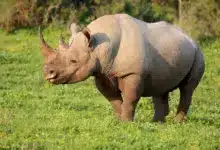
The White Rhino Is The Most Numerous Of All 5 Rhinoceros Species—But That's Not Saying Much. Photo:Esculpapio

The White Rhino Is The Most Numerous Of All 5 Rhinoceros Species—But That's Not Saying Much. Photo:Esculpapio

We have said elsewhere on this site that there are well over 5,000 species of officially Endangered or Threatened animals and birds on our planet. With this post, we will be providing you with ongoing and constantly updated population estimates and other information concerning the status of some of the Endangered, Threatened and Vulnerable species that are of special public concern—as well as statistics and status info on creatures that we think are special, in spite of their not being well known. Please check back frequently for the most recent updates—just click on the “Endangered Species Numbers” link in the navigation bar.

Endangered Species By The Numbers

Unless otherwise noted, all endangered species status information and population figures are taken from the IUCN Red List of Threatened Species. Listings are alphabetical, by common name.

Bears

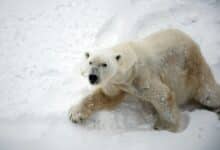
Polar Bear (Ursus maritimus)
Population: 20,000 to 25,000 Status: Threatened Species
Trends: Very likely declining due to habitat loss brought on by climate-change-induced melting of Arctic sea ice and shelf ice.

Giant Panda (Ailuropoda melanoleuca)
Population: 1,000 to 2,000 in the wild. Status: Endangered Species
Trends: Still decreasing due to habitat loss

Grizzly Bear (Ursus arctos horribilis)
Population: More than 500 in the US Lower 48, most in the greater Yellowstone National Park region. Status: Threatened Species under the US Endangered Species Act (ESA).
Trends: Increasing. At its low point several decades ago, the grizzly population was down to 140. ESA protections were removed from grizzlies in 2008, but restored in 2009 following a lawsuit by conservation organizations.

American Bison

(Bison bison)
Population: 19,000 plains bison and 11,000 woods bison exist in conservation herds. Status: Near-Endangered Species. Note: Bison kept in commercial herds are not included in these numbers.
Trends: The bison was hunted to near-extinction in the 19th Century before conservation measures were put into place. It’s Near-Endangered status is based on the fact that the species’ survival requires management of bison (aka buffalo) herds.

Camels

Wild Bactrian (two-humped) Camel (Camelus ferus)
Population: 600 in China; 350 in Mongolia. Status: Critically Endangered Species.
Trends. Declining due to illegal hunting for food. In the mid-1980’s, the Mongolian population was above 600.

One-Humped Camel (Camelus dromedarius)
Population: Extinct in the wild. Thriving feral populations exist in Australia.

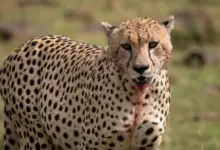
Cheetah

(Acinonyx jubatus)
Population: Between 7,000 and 10,000. Status: Vulnerable Species.
Trends: Decreasing due to habitat loss [click to continue…]

{ 0 comments }