SPIDER MONKEYS

by Editor on April 28, 2011

A Peruvian Spider Monkey, AKA The Black -Faced Black Spider Monkey. Photo:Ivan Mlinarik

Spider Monkeys Get Their Name From The Spidery Length Of Their Limbs—Including That Long, Prehensile Tail

Very few mammals are as superbly adapted to life in the trees as the spider monkey. Spider monkeys have long arms and legs for swinging around in the upper canopies of rain forests, which is where they spend almost all of their time. In addition, spider monkeys have long prehensile tails, which means they can wrap them around branches to serve as a fifth limb. The spider monkey almost never descends to the forest floor; when it does, it’s arms nearly drag on the ground, making it clumsy and vulnerable to predators. High in its treetop home, however, the spider monkey is acrobatic and graceful. [click to continue…]

{ 0 comments }

AUSTRALIA’S MOST ENDANGERED ANIMAL SPECIES

by Editor on April 26, 2011

The Tasmanian Devil Is Listed As Endangered In Australia. Photo:Wayne McLean

Many Species Of Animals In Australia Are Endangered And Threatened With Extinction

Australia’s wildlife evolved in insular isolation for hundreds of thousands of years, a circumstance that resulted in a rich array of animals unlike those anywhere else on earth. This unique and highly unusual set of species began coming under intense pressure immediately after the arrival of the first aboriginal people, who not only hunted many of the larger creatures to extinction, but also introduced dogs to the continent—the ancestors of the dingoes, which went feral and began competing with the continent’s native predators. With the advent of Europeans tens of thousands of years after the first aboriginals reached Australian shores, threats to native wildlife increased geometrically, due in many cases to the introduction of many more species from Europe and elsewhere that were able to either eat or outcompete the native animals. These non-native competitors include foxes, domestic cats, and rabbits.

Currently, there are 444 species of fishes, frogs, reptiles, birds, mammals, and other animals on Australia’s Environmental Protection and Biodiversity Conservation Act List of Threatened Fauna. Classifications on the list include Extinct, Extinct in the Wild, Critically Endangered, Endangered, Vulnerable, and Conservation Dependent. Australian animal species that still exist, but which are in the greatest danger of becoming extinct in the wild, are listed as Critically Endangered. [click to continue…]

{ 0 comments }

The Scaly Anteater, Or Pangolin, Is A Delicacy In China. Many Chinese Also Believe That Their Scales Have Medicinal Properties. Photo:Piekfrosch

Wildlife From Around The Globe Is Ending Up In China’s Restaurants And Folk Pharmacies

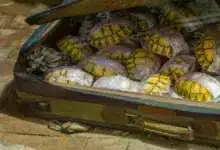
In the spring of 2007, Chinese authorities boarded a large boat found deserted and adrift in their national waters. They discovered a cargo hold literally crammed with an international array of living animals—13 tons of them in all— that apparently had been destined for sale in China’s booming black market in wildlife. There were turtles and lizards from all over Asia, as well as over 1,000 freshwater turtles that had come from Brazil. There were several dozen pangolins, or scaly anteaters, native to the tropical rain forests of the Old World, and over 20 bear paws wrapped in paper.

The crew of the craft had apparently abandoned their lucrative cargo in order to avoid detection and arrest after their engine died. No identification papers were found.

But this boatload of animals bound for China was unusual only in that the creatures were rescued, with many of them surviving their days or even weeks of dehydration, starvation and overcrowding. Conservationists say that many such boats continue to regularly transport wildlife to China, and it is logical to assume that the vast majority do not develop engine trouble. Instead, they safely and quietly reach ports where they can transfer their illegally trafficked wildlife and wildlife products into eagerly awaiting hands. Animals—many of them endangered or verging on becoming endangered—are also smuggled into China via a number of overland routes from Russia, Myanmar (Burma) and other neighboring countries.

The Chinese as a nation love wild animals of all kinds. They love to eat them—both as a demonstration of conspicuous consumption as well as to “absorb” some of the coveted qualities of the wild creatures they consume—and they especially love to make traditional “medicines” out of them. China’s huge population and relatively new affluence have meant that, not only have demand and prices for the earth’s illegally harvested wildlife skyrocketed in the last couple of years, but so has the incentive for, and the determination of, illegal harvesters the world over. Law enforcement officials as far from China as Zimbabwe and South Africa have reported a growing sophistication and greater reliance on expensive, state-of-the-art technology on the part of wildlife poachers in their countries, developments that can almost certainly be attributed to the amount of money the Chinese and other Asians are willing to pay for certain wildlife products. [click to continue…]

{ 0 comments }

ENDANGERED ANIMALS IN CANADA

by Editor on April 6, 2011

Killer Whales (Southern Resident Population) Are An Endangered Species in Canada. Photo:NOAA

Canadian Wildlife: Canada’s Most Endangered And Threatened Species Of Animals

Canada’s Species At Risk Public Registry lists over 600 Canadian animals and plants. The country’s “at risk” living things are classified as either Endangered, Threatened, or of Special Concern, based on how rapidly their populations are declining.

Mammals on the registry include 18 Endangered species, 12 Threatened species, and 17 species of Special Concern.

Birds on the registry include 27 Endangered species, 20 Threatened species, and 19 species of Special Concern.

Listed reptiles include 14 Endangered species, 13 Threatened species, and 9 species of Special Concern. [click to continue…]

{ 0 comments }

ENDANGERED ANIMALS OF TEXAS

by Editor on April 4, 2011

The Jaguarundi Is One Of Four Species Of Endangered Or Threatened Texas Cat. Photo:Bodlina

Texas Has It’s Own List Of Endangered Species Of Animals

Like all states, Texas is home to many species of animals that are protected under the U.S. Endangered Species Act (ESA). Also like other states, Texas maintains its own list of Endangered and Threatened species.

There are 145 Texas animals on the state list of endangered and threatened species, including 29 mammal species, 32 fish species, 24 snakes and other reptiles, 13 frogs, toads, salamanders, and other amphibians, and 17 endangered invertebrate species. Of all the species listed as endangered or threatened by the State of Texas, some are also protected as endangered or threatened under the ESA. Endangered or threatened animals listed by both the state and federal governments include 11 mammal species, 11 fish species, 6 reptile species, 13 amphibian species, and 2 invertebrate species. In addition, the ESA provides protection for another 19 insects, spiders, snails, and other invertebrates that are not listed as endangered or threatened by the state. [click to continue…]

{ 0 comments }

ENDANGERED INSECTS

by Editor on April 1, 2011

The Endangered Karner Blue Butterfly is a North American Species. Photo:USFWS

When We Think About Endangered Species, Bugs Don’t Often Come To Mind. But Many Insects Are Quickly Disappearing, Too.

The U.S. Fish and Wildlife Service (USFWS) tells us that 60 insect species are listed as protected under the U.S. Endangered Species Act (ESA). The list of endangered and threatened American insects includes 17 beetles, 19 butterflies, 2 damselflies, 1 dragonfly, 1 grasshopper species, 2 moths, and numerous flies of different types.

Globally, hundreds of insects face the threat of eventual extinction, according to the International Union for the Conservation of Nature (IUCN). The international conservation organization lists 89 insects as Critically Endangered, 166 as Endangered, and 478 as Vulnerable. According to the IUCN, 60 species of insects are known to have already gone extinct. [click to continue…]

{ 0 comments }

THE MOST ENDANGERED ANIMALS IN BRITAIN

by Editor on March 29, 2011

Water Vole

No, It's Not A Rat! It's A Water Vole, Britain's Most Rapidly Disappearing Mammal. Photo: Rabensteiner

Many Animal Species In The United Kingdom Are Threatened With Extinction

The British Isles are home to numerous animals—mammals, birds, reptiles, amphibians, insects, crustaceans, and even bivalves—that are endangered, declining dramatically in number, and threatened with extinction. The United Kingdom’s Biodiversity Action Plan (UKBAP) lists a total of 1150 native animals and plants that the government considers as “priorities for conservation action.”

Mammals on the list include:

The water vole (Arvicola terrestris, above), which many conservationists consider to be the U.K.’s fastest-declining mammal. This water-loving rodent, which somewhat resembles a rat, suffers from habitat loss as well as from predation by mink, an invasive species similar to a weasel or stoat that is native to North America and which was brought to Britain because its fur was prized for making women’s coats. Mink are now reproducing rapidly and devouring voles.

The Vanishing Red Squirrel. Photo:Hernan De Angelis Campephilus

The red squirrel (Sciurus vulgaris) is another British species whose population is dropping quickly due to a North American invasive animal. The red squirrel’s nemesis is the North American gray squirrel, which is a carrier of a viral disease called “squirrel pox.” While gray squirrels are resistant to the virus’s ravages, the native red squirrels die from it. [click to continue…]

{ 0 comments }