No, It's Not A Rat! It's A Water Vole, Britain's Most Rapidly Disappearing Mammal. Photo: Rabensteiner
Many Animal Species In The United Kingdom Are Threatened With Extinction
The British Isles are home to numerous animals—mammals, birds, reptiles, amphibians, insects, crustaceans, and even bivalves—that are endangered, declining dramatically in number, and threatened with extinction. The United Kingdom’s Biodiversity Action Plan (UKBAP) lists a total of 1150 native animals and plants that the government considers as “priorities for conservation action.”
Mammals on the list include:
The water vole (Arvicola terrestris, above), which many conservationists consider to be the U.K.’s fastest-declining mammal. This water-loving rodent, which somewhat resembles a rat, suffers from habitat loss as well as from predation by mink, an invasive species similar to a weasel or stoat that is native to North America and which was brought to Britain because its fur was prized for making women’s coats. Mink are now reproducing rapidly and devouring voles.
The Vanishing Red Squirrel. Photo:Hernan De Angelis Campephilus
The red squirrel (Sciurus vulgaris) is another British species whose population is dropping quickly due to a North American invasive animal. The red squirrel’s nemesis is the North American gray squirrel, which is a carrier of a viral disease called “squirrel pox.” While gray squirrels are resistant to the virus’s ravages, the native red squirrels die from it. [click to continue…]
The Wolverine Is A Threatened Species In California. Photo:National Park Service
California Has It’s Own List Of Endangered Species Of Animals
Like all states, California is home to many species of animals that are listed and protected under the U.S. Endangered Species Act (ESA). Also like other states, California maintains its own list of Endangered and Threatened species.
A total of 157 California animals are on either the state list of endangered species, the federal list of endangered species, or both lists at once. As of January, 2011, the state endangered species list contained 46 animals that were listed as Endangered, and 35 animals that were listed as Threatened. California animals protected under the federal ESA include 88 Endangered animals and 40 animals that are officially Threatened. [click to continue…]
Not Seen Since 1995, The Rio Pescado Stubfoot Toad Had Been Feared Extinct. Photo:Eduardo Toral-Contreras
Late Last Year, Teams Of Scientists Searched The World For One Hundred Endangered Frog Species That May Have Gone Extinct
Five months, 5 continents, 21 countries, 126 researchers, and 100 species of “missing” frogs and other amphibians.
Several conservation organizations recently announced the results of their “Search For Lost Frogs,” a global scientific treasure hunt in which the living “treasure” was comprised of frogs, toads, and salamanders that had not been seen in at least 10 years. According to one of the groups, Conservation International, researchers who participated in the search, which ran from August to December, succeeded in locating 4 amphibians on their list of 100 vanished species. Also found were 11 species that had been left off the list in spite of not having been seen for a long time.
An additional surprise was the discovery of three apparently brand-new amphibian species in Colombia. [click to continue…]
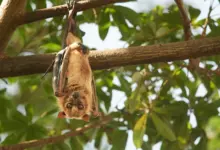
The Endangered Indiana Bat Is One Of The American Species Threatened By White Nose Disease. Photo:USFWS
White-Nose Disease Has Killed A Million Bats So Far—And There’s No Cure On The Horizon
White-nose disease was first discovered in a single bat cave in upstate New York in 2006. Since then, the fatal fungal illness, which shows up as white patches on the faces and wings of hibernating bats, has spread to 16 states and crossed the Canadian border. The fungus, Geomyces destrucans, is now killing bats in caves, mine shafts, and abandoned buildings as far south as North Carolina, and as far west as Oklahoma. Biologists say that a million bats have died so far, and they add that, unless a way is found to stop the disease, within two decades bats may be entirely extirpated from some regions of the country.
The little brown bat (Myotis lucifugus) has been hardest hit by the sickness—but that’s only because the little brown is the most common of our bat species. There are 22 other species of American bats that also hibernate in caves, and many of those bats are being affected as well. Of special concern to biologists are the endangered Indiana bat and five other bat species that are protected under the U.S. Endangered Species Act (ESA). The disease has already destroyed at least a third of the Indiana bats in the Northeastern U.S., scientists say. [click to continue…]
Should Lions Be Listed As Endangered By The U.S. Government? Photo:Miroslav Duchacek
Lions Are Not Listed As Endangered. But Their Numbers Are Falling, And Conservationists In The U.S. Disagree Over A Hunting Ban.
Aside from our native mountain lions—which are actually cougars and not really “lions” at all—the only lions in the U.S. live in zoos and other forms of captivity. Wild lions of course almost all live in Africa, with a tiny remnant population of a few hundred Asiatic lions hanging on in India. Yet, on March 1, a coalition of U.S.-based conservation groups spearheaded by the Defenders of Wildlife petitioned America’s top wildlife agency to list African lions as an official endangered species in the U.S.
The idea isn’t as strange as it sounds. The U.S. Fish and Wildlife Service (USFWS) often lists non-native species as threatened or endangered in order to prohibit the importation of those animals and their furs, feathers, or other parts, as well as any products made from them. The goal is to deny the U.S. as a market for people who kill or capture endangered or threatened species, thereby removing some of the incentive to “harvest” them. In the case of lions, Defenders of Wildlife and its allies hope to specifically discourage wealthy American hunters from traveling to Africa in order to kill lions. Why, after all, would American lion hunters pay good money to shoot an animal whose hide and skull they could not bring back home?
Internationally, lions are listed as “Vulnerable” by the International Union for the Conservation of Nature—one rung below an official Endangered listing. However, there is no question that the big cats are in decline. There are an estimated 30,000 lions remaining in all of Africa, down from perhaps 200,000 as recently as the 1970s. Numbers have plummeted as Africa’s human population has expanded into lion habitat, reduced the numbers of prey animals that lions need to live, and killed lions in order to protect livestock and human lives. [click to continue…]
The Loggerhead Turtle Is One Of Many Saltwater Turtle Species In Danger Of Extinction. Photo: Damien du Toit
Tortoises And Turtles That Live In Both Fresh- And Saltwater Are Among The Most Endangered Vertebrates On The Planet
What do turtles and tortoises have in common with apes, monkeys and lemurs? The answer, according to the Turtle Conservation Coalition, is that shell-backed reptiles and primates share the dubious distinction of being the two most endangered groups of vertebrates on the planet.
The conservation group says turtles and tortoises are under greater threat of extinction than any other group of birds, mammals, fish, rays, reptiles or amphibians—even frogs, which have recently received a lot of well-deserved attention because of the environmental threats facing them.
Turtles and tortoises are among the world’s oldest and most successful groups of animals, occupying environmental niches on all continents but Antarctica, as well as in all but the coldest oceans. However, over the past several decades, about half of the 328 known turtle and tortoise species have come under the threat of extinction, in most cases because of over-exploitation by humans. [click to continue…]
Rare Javan Rhinoceros Mother And Baby Captured on Video. Only Around 40 Of These Critically Endangered Animals Remain.
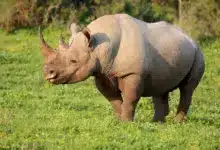
The Javan rhino (Rhinoceros sondaicus) is one of the rarest and most critically endangered large-animal species on earth, with as few as 40 individuals remaining. So, wildlife conservationists around the world were overjoyed to learn that motion-activated cameras—also called “camera traps”—recently had captured video of not one, but two baby Javan rhinos browsing alongside their mothers. (You can view one of the mother-baby pairs in the video posted above.)
The images provide welcome proof that Javan rhinos are reproducing in the wild—as well as strong evidence that, if left alone and with adequate habitat by humans, the species, which is listed as Critically Endangered by the International Union for the Conservation of Nature (IUCN), would readily multiply. [click to continue…]
The recent, credible announcement that an international team of scientists is planning to create a baby mammoth through cloning has inspired much speculation about the possibility of using the cloning process to save endangered species. Unfortunately, cloning is not the answer to the earth's problem of plummeting biodiversity. Not only will the process probably always be too expensive to create significant numbers of large wild animals, but the animals produced would end up being virtual carbon copies of one another, and therefore lacking in the genetic diversity necessary to sustain a population. As always, the way to conserve endangered species is to stop exploiting them, and to preserve their habitats.
Read more about cloning and endangered species.
Africa Loses A Wild Rhino A Day
A World Wildlife Fund (WWF) official tells us that poachers in South Africa appear to be on track to kill as many rhinoceroses as they killed in 2010—a year in which the country's parks and game preserves lost a record 333 rhinos to increasingly determined and well-equipped illegal hunters. Although the South African military has become involved in the effort to save rhinos, and some poachers have even died in firefights since the beginning of the year, the WWF official says the real key to bringing a halt to poaching is to end demand for rhino horn in China and elsewhere in Asia.
Read the complete article.
U.S. Fish & Wildlife Service: The Eastern Cougar Is Extinct
After spending years reviewing hundreds of relatively recent reports of cougar sightings east of the Mississippi, as well as examining hair, scat samples, and even a few photographs, America's top wildlife agency has come to a firm conclusion: The Eastern mountain lion, or cougar, no longer exists. Although there have been a few verified cougar sightings in the eastern United States over the past several decades, the nation's top wildlife agency asserts that the cougars in question all were animals that had either escaped or been released from captivity, or were Western mountain lions that had wandered East. And example of the latter was a cougar that was shot in downtown Chicago several years ago. The complete story is available here.
Time Is Running Out For Tigers
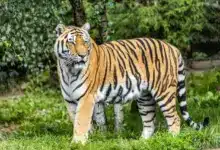
As one of the world's most charismatic species, wild tigers recently have been attracting increasing amounts of attention and conservation funding. Celebrities such as actor Leonardo DiCaprio have become involved in trying to save tigers by speaking publicly about their plight, as well as by donating money. Unfortunately, owing to the fact that the skin, bones, and body parts from one tiger are worth tens of thousands of dollars on the Asian black market, the bright focus on the species has yet to slow its plunge toward extinction. There are now just around 3,000 wild tigers left in the world, down from perhaps 100,000 less than a century ago.
Read more about saving endangered tigers.
Biologist Hopes To Save Leopards With Fake Fur
South African leopard biologist Tristan Dickerson has entered the fashion world in an attempt to slow the poaching of leopards. Dickerson is trying to find a way to produce faux leopard skins that are convincing enough to satisfy the members of a native religious group that uses leopard-fur garments in its religious ceremonies and pageants. Currently, many male members of South Africa's four-million-strong Nazareth Baptist Church wear the real thing, thereby creating a market for the skins of illegally hunted leopards.
Read more about the quest for the perfect fake fur.
Dolphin-Safe Tuna: Some Disturbing Facts
Back in the 1980's, the tuna-fishing industry used fishing techniques that resulted in the deaths, as "by-catch," of tens of thousands of dolphins annually. Then, in the wake of a massive public awareness campaign, the industry changed its practices. As a result, the tuna industry now accidentally kills only a relative handful of sea mammals each year. Unfortunately, the most widely used "dolphin-safe" fishing methods have a serious drawback: Instead of killing dolphins, they kill vast numbers of fish other than the tunas that the fishermen are seeking. The sharks, rays, immature tunas and other species caught as by-catch are then discarded back into the ocean.
Read more about Dolphin-Safe Tuna.
New York Times Falls For Amazon Indians' Fish Story
They say that when you have a hammer in your hand, everything starts to look like a nail.
New York Times environmental reporter Elisabeth Rosenthal has written extensively about global climate change. So, when she discovered that a group of Indians in the southern part of the Brazilian Amazon were experiencing a steep decline in the numbers of river fish they were catching, Rosenthal immediately focused on climate change as the culprit.
But in viewing the problem through such a narrow lens, the reporter missed the big picture of changing environmental conditions in the upper Xingu River region, which is the fastest-growing corner of the Amazon. For one thing, she ignored the fact that around 10,000 small dams have been built on Xingu River tributaries over the last couple of decades—and that these dams undoubtedly have a major effect on fish populations.
Neither did the reporter quote any scientists on climate change and other factors that might be affecting the Upper Xingu as well as the Amazon at large. The researchers interviewed by All About Wildlife.com said she got a lot of things wrong.
But her most interesting mistake was to take the Indians at their word when they told her they were teetering on the edge of starvation. According to the American-born Brazilian rancher who accompanied the reporter to the Indians' village, the native people were for the most part just pulling her leg.
Read the entire article.
Monkeys Demonstrate Use Of 'Dental Floss' To Their Young
Wildlife researchers working in Thailand recently discovered that, not only do macaque monkeys use pieces of hair to floss their teeth, but they also demonstrate good oral hygiene technique to their youngsters. The scientists said that when youngsters approached an adult monkey that was using "floss" to clean its teeth, the adult would often slow down and exaggerate its flossing motions as if to show the younger primate how to do the job properly.
Read more about monkey flossing.
Where The Buffalo Will Roam
International conservationists are developing plans to restore American bison—popularly called "buffalo"—to significant portions of their former range on the US Great Plains.
Read more about Restoring Bison To America.
The "Good" Earthworm?
We tend to think of earthworms as being beneficial. However, most species that we now find in our yards and gardens are not native to America—they were brought here from Europe and Asia. This means that, not only have they displaced many American worm species, but they are capable of doing actual harm to some American ecosystems.
Read more about Alien Earthworms.
Outdoor Cats Pose a Major Environmental Threat
Habitat loss is clearly the main threat facing native birds in North America and elsewhere. In fact, some migrant species face shrinking habitat at both ends of their range: In North America, where they breed during the spring and summer, and it Central and South America, where they spend their winters.
But, among other problems birds must contend with, the problem of predatory house cats is also a serious one. According to estimates from some conservationists, in North America alone feral felines and pet cats that are allowed to roam outdoors kill around half a billion birds each year.
Read the entire article here.
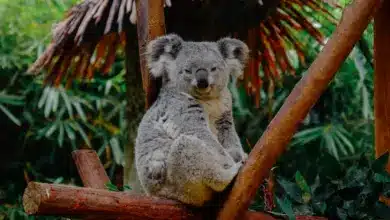
Koalas Struggle To Survive As A Species
Australian wildlife researchers recently made a disturbing discovery: Their population estimates for the number of wild koalas were more than 20 percent higher than the number of the koalas that actually remain in the country's forests. Revised estimates now put the population of Australia's emblematic animal at no higher than 80,000, and perhaps fewer than 50,000. The main cause is habitat loss, but other problems include run-ins with automobiles and dogs, as well as apparent global-warming-induced changes in the koala's main food source.
Read more about koalas here.
One Third Of All Amphibian Species Are In Danger Of Extinction
Amphibians—including frogs and salamanders—are among the most imperiled species on the planet, according to conservationists. In fact, some scientists say that as many as a third of all amphibian species are in danger of going extinct. Along with many of the same environmental problems faced by other types of animals, amphibians are also threatened by a fast-spreading and fatal fungal disease.
More about the amphibian crisis here.
Climate Change Hits Arctic Species, Including Polar Bears and Walruses
Global climate change is affecting the Arctic and Antarctic more dramatically and more quickly than any other parts of the earth. In the case of the Arctic, in recent years there has been less ice in the oceans at the top of the world—and the change is bringing hardship to some of the species that depend on ice for their survival. Polar bears, for instance, hunt seals on the ocean ice; when ice is scarce, the bears find it difficult to find food. Walruses, for their part, raise their young on ice. They also travel on the ice, allowing it to carry them to constantly fresh foraging grounds. US wildlife officials are currently looking a ways of helping species that are suffering due to climatic changes in their once-frozen environment. Read more about global climate change and polar bears as well as more about how Pacific walruses are affected by global warming.
Don't Accessorize Your Life With Wildlife
With the possible exception of a few very common tropical fish species, it is almost never a good idea to turn a wild animal into a pet. Not only do wild animals simply belong in their own habitat, but collection for the pet trade is pushing many vulnerable species onto top 10 endangered species lists and closer to the brink of extinction in the wild.
In response to concerns by conservation organizations, the US Fish & Wildlife Service is currently considering giving Endangered Species Act protection to a number of non-US tropical bird species in order to prevent them from being imported into the country.
Read our full article about endangered species and the pet trade.